
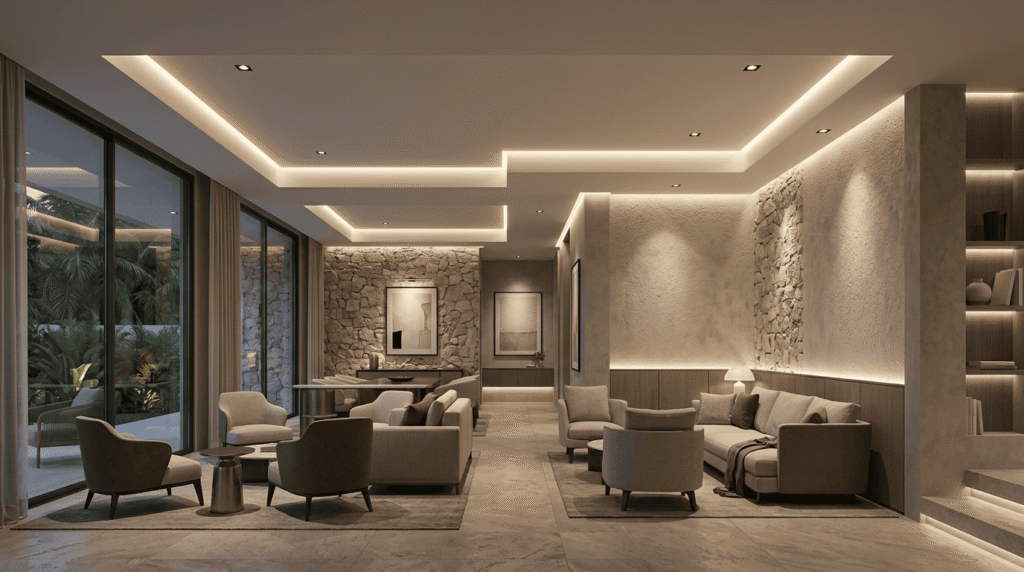
1. Sustainable Illumination
In an age where environmental consciousness shapes design choices, sustainable illumination takes the spotlight. LED technology has revolutionized lighting, offering energy-efficient solutions that drastically reduce energy consumption. These fixtures, renowned for their longevity and low energy usage, have become a cornerstone of eco-friendly design. Furthermore, designers are exploring innovative materials and designs that not only minimize the carbon footprint but also infuse spaces with sophistication and elegance.
2. Integration of Smart Technology
Smart interior lighting design systems enable unprecedented control, allowing users to fine-tune ambiance, colour, and brightness at their fingertips. Voice-activated commands and smartphone apps offer seamless customization, transforming spaces into dynamic, adaptable environments. This convergence of design and technology not only enhances convenience but also unleashes boundless creative potential, inviting a new era of artistic expression within interiors.
3. Human-Centric Lighting
Understanding the profound impact of light on human physiology and well-being has led to the emergence of human-centric lighting. This trend prioritizes the emulation of natural light cycles to regulate circadian rhythms, positively influencing mood, productivity, and overall comfort. Tunable LED fixtures dynamically adjust color temperatures throughout the day, creating an environment that seamlessly adapts to occupants’ biological needs.
4. Statement Fixtures and Art Installations
Light fixtures have transcended their utilitarian role to become awe-inspiring art pieces. These statement fixtures serve as captivating focal points within interiors, imbuing spaces with character and allure. Moreover, the fusion of lighting with art installations blurs conventional boundaries, transforming spaces into immersive experiences. These installations, meticulously crafted with light as a medium, evoke emotions and narratives, elevating interior design into an art form that transcends mere functionality.
5. Invisible Lighting
The minimalist approach takes center stage with invisible lighting techniques. Designers are employing discreet fixtures that remain concealed and seamlessly integrated within architectural elements. Indirect lighting methods, like cove lighting and concealed LED strips, subtly accentuate structural features without overwhelming the design aesthetic. This technique creates an ethereal, understated ambiance that exudes sophistication and modernity, showcasing the beauty of subtlety within interior spaces.
6. Biophilic Lighting Design
Drawing inspiration from nature, biophilic lighting design seeks to recreate organic elements within interior spaces. By replicating natural phenomena, such as dappled sunlight or gentle water reflections, designers infuse spaces with a sense of tranquility and harmony. Biophilic lighting not only connects occupants with nature but also introduces a calming effect, fostering well-being and serenity within the built environment. The interplay between light and nature-inspired designs creates an riveting experience that evokes a profound connection to the outdoors.
7. Dynamic Atmospheric Lighting
The ability to change the colour scheme dynamically has emerged as a captivating trend. LED technology facilitates seamless transitions between an array of hues, enabling designers to craft diverse moods and atmospheres within spaces. Whether it’s a vibrant, energetic ambiance or a calming, serene setting, dynamic colour-changing lighting adds a layer of versatility and adaptability to interior design.
8. Mixing Traditional and Modern Elements
A trend that combines the charm of traditional lighting fixtures with contemporary designs is gaining momentum. Designers are blending vintage or classic lighting styles with modern spaces, creating a juxtaposition that adds depth, character, and a touch of nostalgia to interiors. This fusion of old and new brings about a unique aesthetic that resonates with both history and innovation.
9. Emphasis on Unique Textures and Shadows
Lighting isn’t just about brightness; it’s also about creating intriguing shadows and textures. Designers are using unconventional materials, diffusers, and patterns to manipulate light, casting intricate shadows that transform plain surfaces into works of art. This emphasis on textures and shadows adds depth, drama, and visual interest to spaces, elevating the overall design aesthetic.
10. Holographic and 3D Lighting Techniques
Advancements in holographic and 3D lighting technologies are pushing boundaries in creating hypnotic environments. These techniques project multidimensional light patterns, creating illusions of depth and movement. Designers are leveraging these innovations to craft captivating and interactive lighting installations that redefine spatial experiences.
11. Artificial Intelligence and Machine Learning in Lighting
The integration of AI and machine learning algorithms is revolutionizing lighting systems. These technologies enable lighting systems to learn and adapt to occupants’ preferences, behaviors, and environmental conditions. AI-driven lighting can optimize energy efficiency, personalize lighting experiences, and even anticipate occupants’ needs, offering a seamless and intelligent environment.
12. Faux Skylight
A faux skylight is an artificial lighting installation that mimics natural daylight coming through a ceiling opening. It typically consists of LED panels or fixtures with diffusers, creating a soft, natural glow resembling sunlight. Some feature visual elements like simulated skies or clouds to help imitate natural lighting effects.