
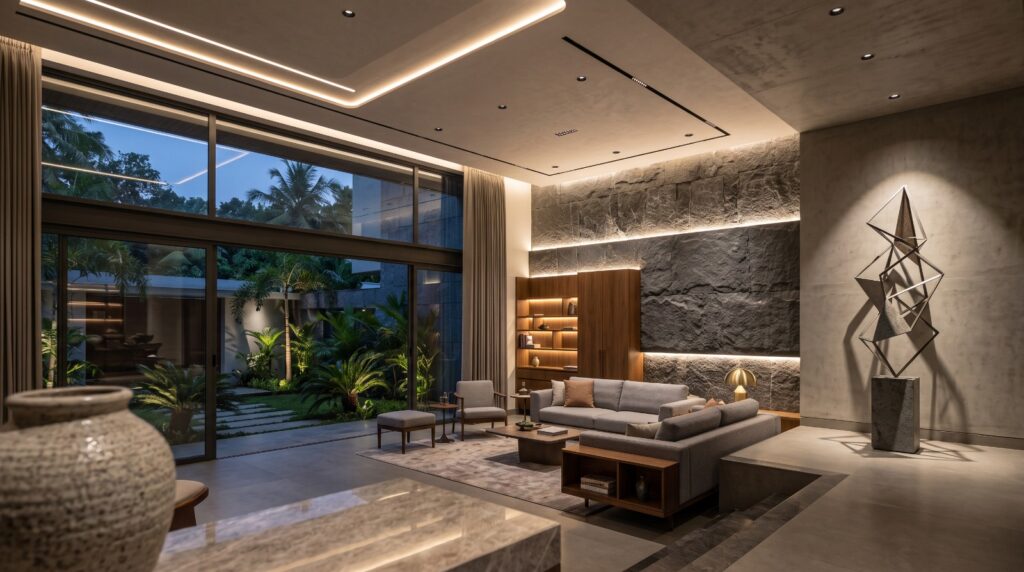
Lighting artistry is the meticulous manipulation of light to enhance the aesthetics and functionality of indoor and outdoor spaces.
It involves carefully selecting fixtures, designing lighting layouts, and controlling light intensity and color to create a harmonious blend between form and function.
Just like a painter uses brushstrokes to bring a canvas to life, a lighting artist uses fixtures to paint with light, defining the visual narrative of a space.
Enhanced Ambiance
Lighting sets the tone for a space.
Modern fixtures enable the creation of various moods, from cozy and intimate to vibrant and energetic.
Soft, warm lighting can make a room feel welcoming, while crisp, cool lighting can infuse a space with a sense of modernity and sophistication.
Architectural Emphasis
Lighting can be used to accentuate architectural features and details that might otherwise go unnoticed.
For instance, uplighting can emphasize the height of a vaulted ceiling, while wall washers can highlight textured surfaces, contributing to a three-dimensional visual experience.
Focal Points
Lighting artistry directs the viewer’s gaze by creating focal points.
Chandeliers, pendant lights, and artfully positioned spotlights can draw attention to specific areas, such as a stunning artwork, a statement piece of furniture, or a decorative installation.
Personalization
Modern lighting fixtures offer a plethora of customization options.
With dimmable LEDs and adjustable color temperatures, spaces can be adapted to suit different activities and moods.
This personalization empowers inhabitants to curate their environment according to their preferences.
Visual Drama
Lighting artistry adds an element of drama to spaces.
Backlighting, silhouetting, and shadow play can all contribute to an atmosphere of intrigue and captivation.
Such techniques work particularly well in creating memorable experiences in commercial and hospitality settings.