
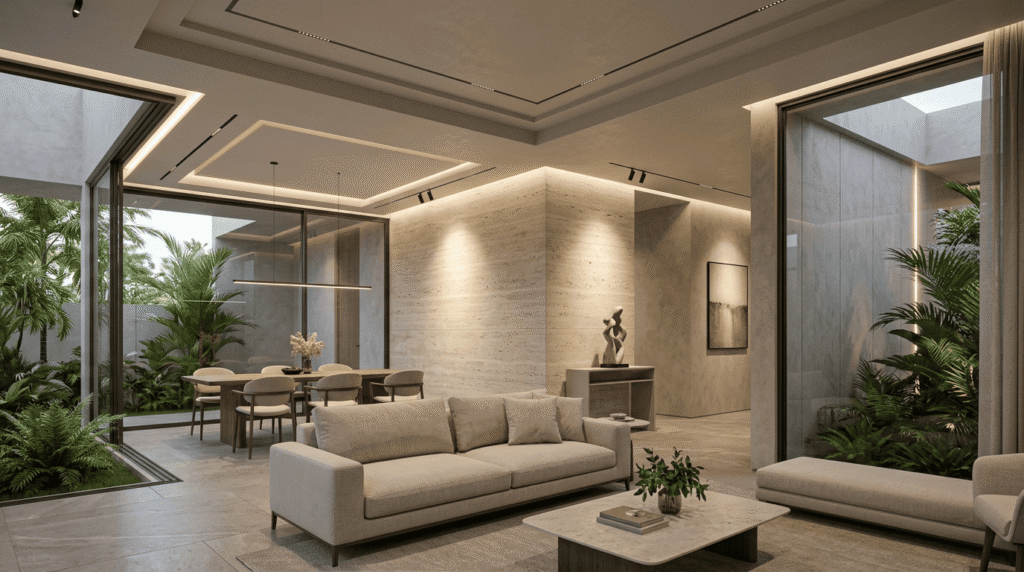
Principles and Techniques for Interior Spaces
Lighting design is an art and science that plays a pivotal role in transforming the ambiance of interior spaces. Well-planned lighting can enhance the functionality, aesthetics, and mood of a room, making it essential for architects, interior designers, and homeowners alike. To create a harmonious and inviting environment, one must understand the fundamental principles of lighting design.
Achieving balance and proportion in lighting design is crucial to avoid over-illuminated or dim spaces. There are three primary types of balance in lighting:
- Symmetrical Balance: In symmetrical balance, light sources and fixtures are evenly distributed, creating a sense of equilibrium. This is ideal for formal settings or spaces where a sense of stability is desired.
- Asymmetrical Balance: Asymmetrical balance involves an uneven distribution of light, which can be used to highlight specific areas or elements in a room. It is often used in contemporary and eclectic designs.
- Radial Balance: Radial balance is centred around a focal point, with light fixtures radiating outwards, creating a dynamic and eye-catching effect. It’s commonly used in spaces where a particular element, such as artwork or a decorative feature, deserves attention.