
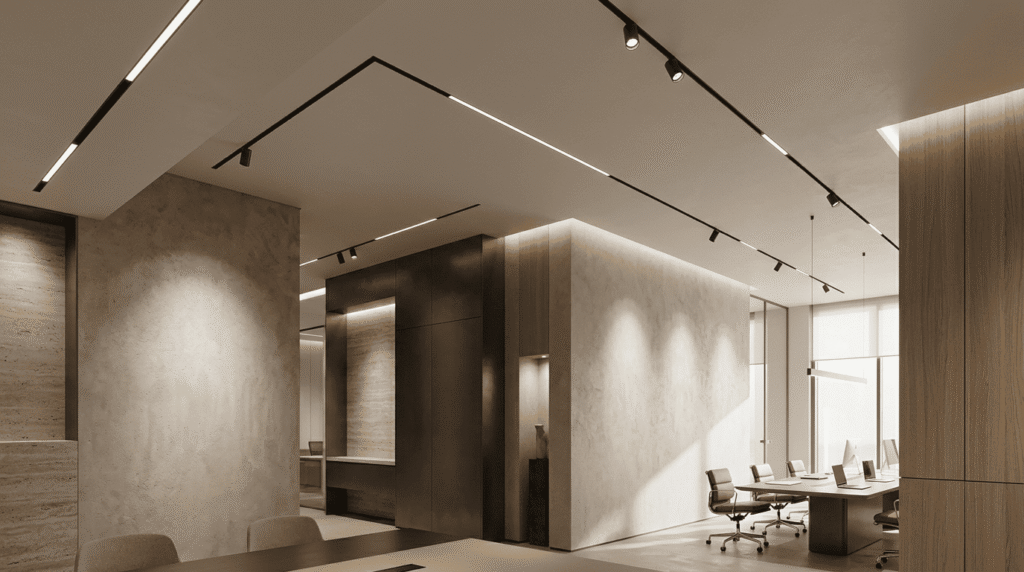
1. Determine the Purpose of Each Space
Before investing in lighting, assess each area’s function. A break room will require different lighting than a sales floor. Think about:
- The tasks conducted in each area
- The overall mood you want to create
- How natural light behaves throughout the day
2. Choose the Right Color Temperature
The color temperature of light can significantly impact the mood and functionality of a space. Common ranges include:
- Warm White (2700K-3000K): Creates a cozy atmosphere, perfect for restaurants or retail areas.
- Neutral White (3500K-4100K): Offers a balanced light that’s suitable for office environments.
- Cool White (5000K-6500K): Mimics daylight and is ideal for task-oriented spaces like workshops or garages.
3. Layer Your Lighting
Using a combination of ambient, task, and accent lighting creates a visually appealing and functional environment. Consider the following:
- Use multiple light sources to avoid harsh shadows
- Incorporate dimmers for flexibility in brightness
- Vary the heights and sizes of fixtures for dynamic visual interest
4. Consult a Professional
If you’re unsure where to start, consulting with a lighting designer or electrician can provide valuable insights tailored to your specific needs. They can help:
- Calculate the necessary wattage and lumens for each area
- Recommend energy-efficient options
- Ensure compliance with local regulations
Conclusion
Selecting the right lighting solutions for your commercial space can transform the environment, fostering productivity and enhancing the customer experience. By understanding the different types of lighting available, embracing energy-efficient options, and implementing practical strategies, you can create a well-lit, welcoming atmosphere that aligns with your business goals. Remember, lighting is not just about visibility; it’s about creating a mood that resonates with employees and customers alike. Illuminate your space wisely!